Welcome to Week Four
If Week 3 was about getting ideas out of our heads and onto the screen, Week 4 was about deciding what really matters. This was the week where both projects narrowed their focus onto the most important part of any product: the home screen.
The home screen is where intent meets reality. It’s the first thing users see, the place they return to, and often the moment where a product either earns trust or quietly loses it. Decisions here tend to ripple across everything else — which is why this week involved a lot more debate, trade-offs, and uncomfortable conversations than usual.
Monday – Why the Home Screen Is Never “Just a Screen”
I started the week by stepping back and asking a simple question for both projects: what does success look like the moment a user opens the app?
For HYD, that question carried emotional weight. Opening the app might mean someone is anxious, overwhelmed, or on the edge of a spiral. A cluttered or overly functional home screen would be a failure in that moment.
For GetActive, the stakes were different but just as real. The home screen needed to motivate without nagging, guide without overwhelming, and feel rewarding without slipping into guilt-driven mechanics.
I spent most of Monday revisiting last week’s wireframes and flows, stripping them back and listing what actually needed to live on the home screen versus what could be pushed elsewhere.
Tuesday – HYD: Designing for Emotional State, Not Features
Tuesday was almost entirely dedicated to HYD.
Using insights from the viability and doomscrolling research, I explored multiple home screen concepts:
- A calm, minimal check-in focused on emotional state.
- A slightly more directive version that gently nudged grounding exercises.
- A safety-first version that foregrounded trusted contacts without feeling alarmist.
The hardest part here wasn’t layout — it was restraint. Every additional element risked adding cognitive load at exactly the wrong moment.
I kept asking myself: If I were opening this app at my worst moment, what would I actually want to see?
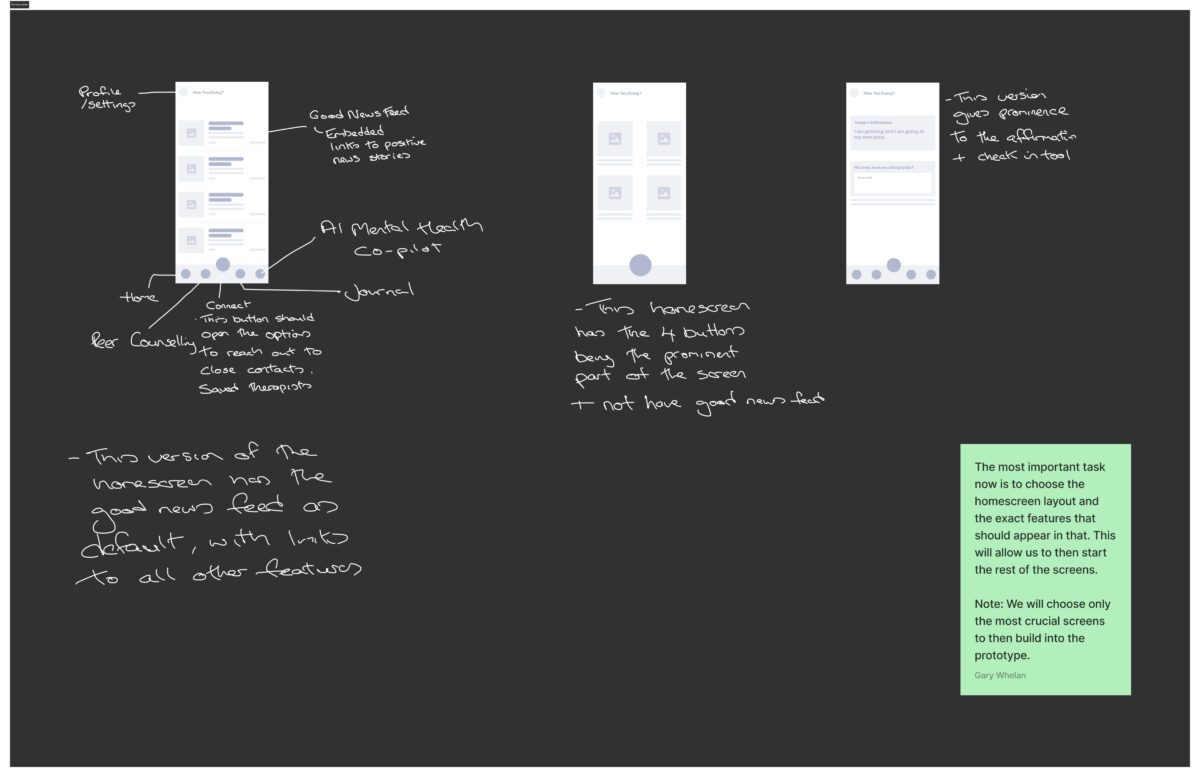
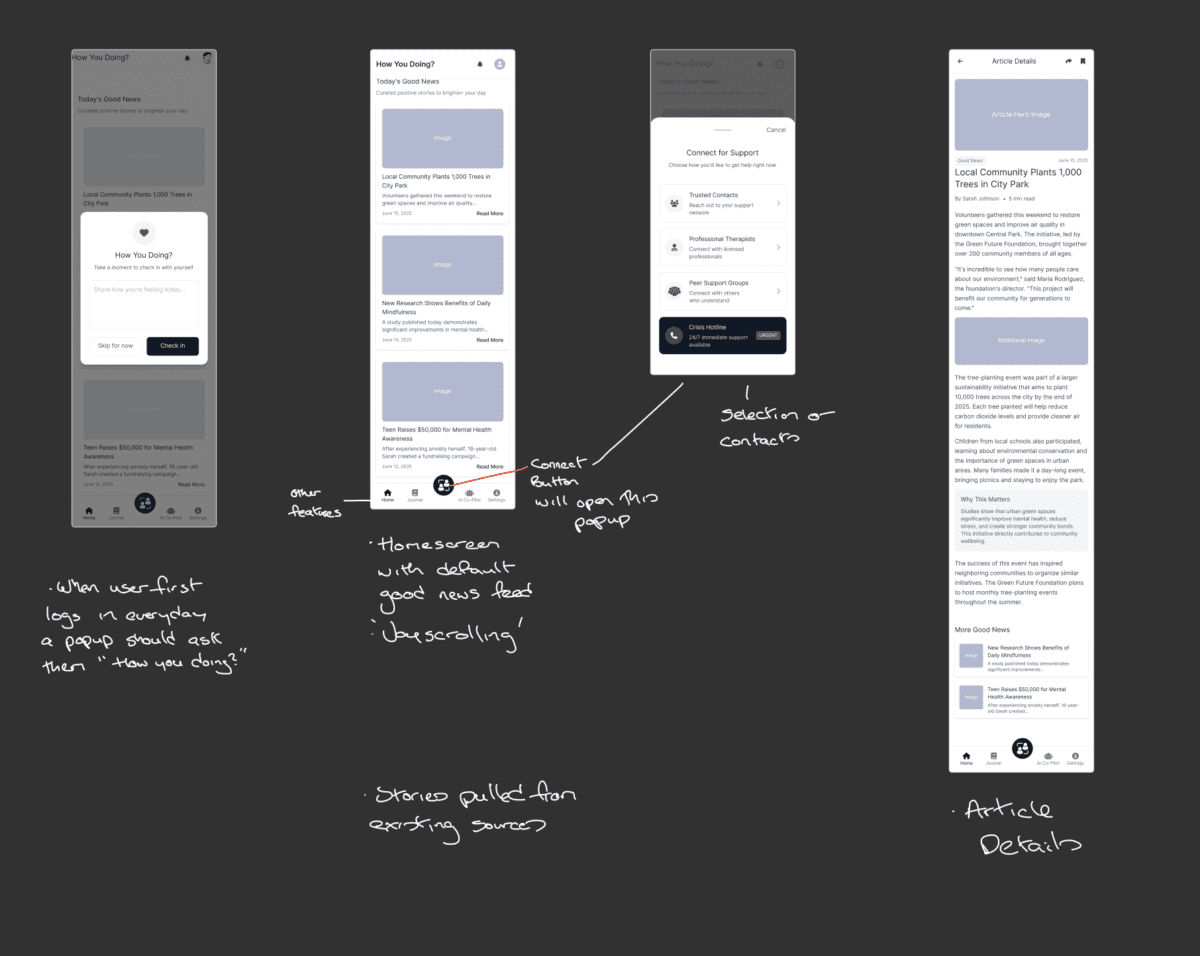
Artefact: HYD Homescreen concepts.
Wednesday – GetActive: The Home Screen as a Motivator
Wednesday shifted focus back to GetActive.
Unlike HYD, GetActive’s home screen needed energy. But energy can easily tip into pressure.
I prepared for the upcoming home screen workshop by mapping:
- Primary actions vs. secondary encouragements.
- Where progress should be visible.
- How much data is too much data on day one.
One recurring tension surfaced: the client’s instinct to surface leaderboards immediately versus my concern that this could alienate new or less confident users.
Thursday – The GetActive Home Screen Workshop
Thursday was workshop-heavy.
We ran the GetActive Home Screen Workshop, walking through multiple concepts and pressure-testing them against different user mindsets:
- Someone highly motivated.
- Someone returning after a long break.
- Someone who’s already feeling behind.
The session was revealing. When asked to choose, stakeholders consistently gravitated toward simpler, more human designs, even when their initial instincts leaned feature-heavy.
This was one of those moments where facilitation matters just as much as design — letting people see the trade-offs rather than argue about them abstractly.
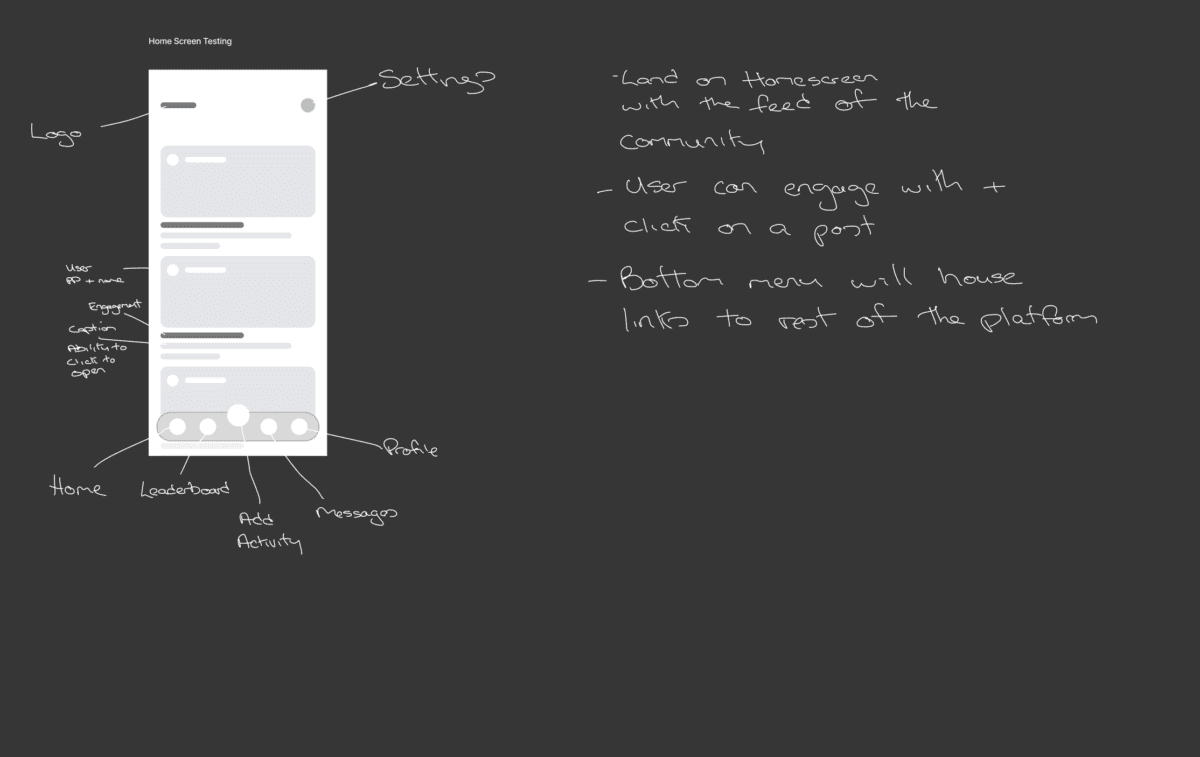
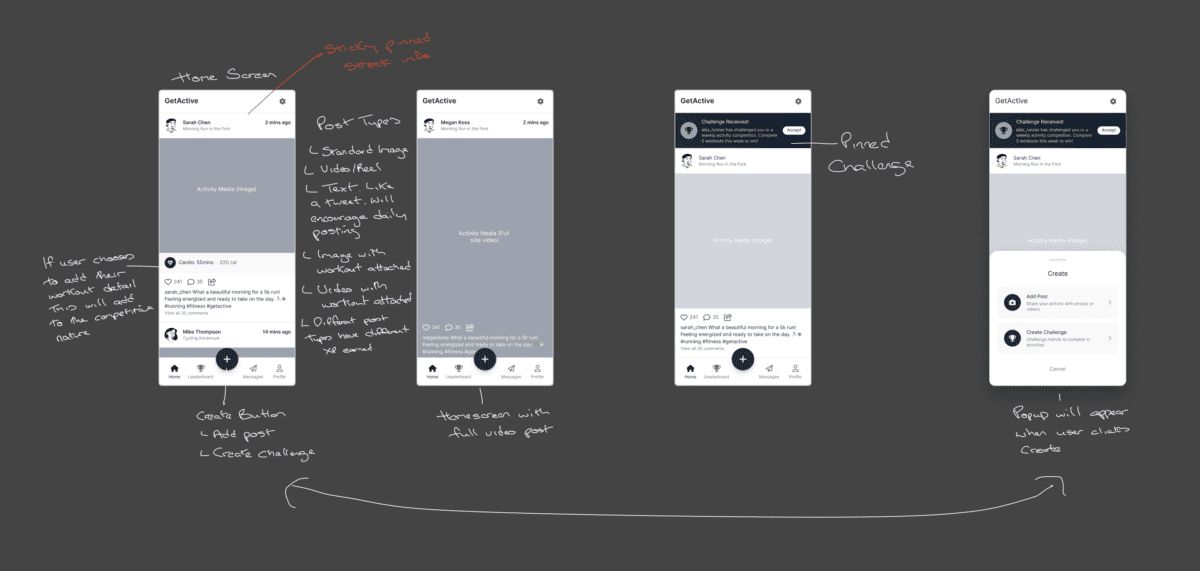
Artefact: GetActive Phase 1 Home Screen Workshop outputs.
Friday – Aligning Both Projects
Friday was about reflection and alignment.
Looking at both projects side by side, a shared theme emerged: less is more.
- HYD’s home screen needed to feel like a safe pause.
- GetActive’s home screen needed to feel like an achievable invitation.
I updated both sets of wireframes based on the week’s discussions and sent summary notes to stakeholders, clarifying what decisions were made — and just as importantly, why.
Elsewhere This Week…
Outside of HYD and GetActive:
- Reviewed a dev handoff for another client’s onboarding redesign.
- Conducted a competitor audit for a mindfulness product pitch.
- Joined a strategy call focused on how UX could support new business growth.
Looking Ahead
Next week moves away from structure and into tone and emotion.
For both projects, we’ll start defining visual language, mood, and voice — the layer that turns functional screens into experiences people actually connect with.
Artefacts coming up: HYD Mood Board, GetActive Design Moodboard.